

Vedberry आपका स्वास्थ्य, हमारा उत्पाद
Shop now
over 1 Million+
users across 15
nations

Formulated with
powerful
superfoods

Handpicked from
the valleys of
Ladakh

Ethical and
transparent
process

Purity ensured
through lab
certifications
over 1 Million+
users across 15
nations
Formulated with
powerful
superfoods
Handpicked from
the valleys of
Ladakh
Ethical and
transparent
process
Purity ensured
through lab
certifications
Featured products
-
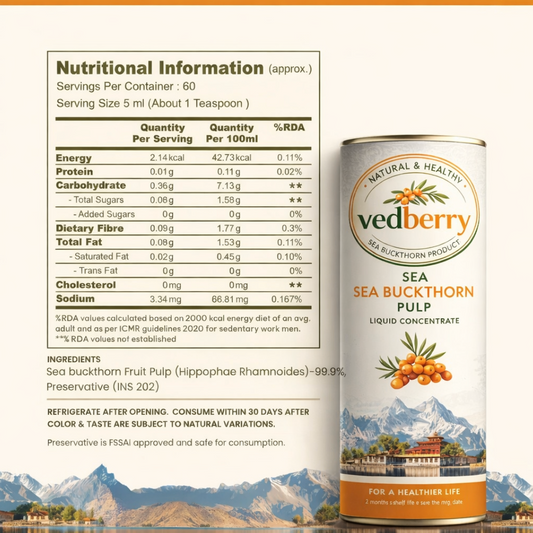
Vedberry Sea Buckthorn Juice (Pulp) Natural Vitamin C | Immunity & Skin Glow
Regular price Rs. 649.00Regular price


Trusted By Health Experts
Backed by nature, affirmed by science. vedberry: Trusted by Health Experts for your daily wellness.
Frequently Asked Questions
Trusted in more than 12 countries and over 5 million customers.
Sea Buckthorn is good for what exactly? ▾
Sea buckthorn, being a nutrient-rich superfood (vitamins, minerals, and antioxidants), has been used for centuries in traditional medicines and for environmental restoration. This is good for immunity boost, glow, and clean skin, heart health, digestive health, and anti-inflammatory benefits.
Does Sea Buckthorn support heart health? ▾
Of course, sea buckthorn is good for heart health due to the presence of antioxidants and phytosterols. When you intake this superfruit in the form of berries, seed oil, and leaves, it lowers bad cholesterol levels, increases blood vessel function, and supports overall cardiovascular health.
What’s the Indian name for Sea Buckthorn? ▾
The Indian name of sea buckthorn is "Leh berries" or "Chuk" in some regions, not widely known by a specific common name in India. This superfruit is generally known as Hippophae rhamnoides, which is the scientific name, or simply as Sea Buckthorn.
Is Sea Buckthorn safe for kids and elderly people? ▾
Yes, sea buckthorn is safe for kids (5+ above), boosts skin, immunity, digestive support, and overall helps in a kid’s physical and mental development. Similarly, for the aged group (60+ above), it supports bone and joint use, improves heart function, and boosts brain function. Proper dosage and form (food, water, or oil) must be considered.
Where is Wellwith’s Sea Buckthorn grown? ▾
It mostly grows in native habitats like Ladakh, India, Asia. It tolerates temperatures between -40°C to +40°C in sandy soils, rocky or gravelly soils with good drainage, and full sunlight.
Can I get all my Omegas from Sea Buckthorn? ▾
Yes, Sea buckthorn is enriched with Omega fatty acids (3, 6, 7, and 9) that make it an ideal choice for daily consumption in multiple forms like pulp, leaves, or oil.
Is Sea Buckthorn sustainable to harvest? ▾
Sea buckthorn has been used traditionally as a sustainable crop due to its stability in poor soil and harsh climate, regenerative properties, and renewable resources. Responsible harvesting practices are essential to maintain ecosystem balance.


